Pages

Subscribe:

Ads 468x60px

Social Icons

Tuesday, September 4, 2012

Twitter's Developer Crackdown Offers App.net a Chance to Rethink Microblogging


There's an instinct programmers feel often, when a big coding project has become a massive, tangled mess of workarounds, Band-Aids, and cruft. At some point, when its time for, say, version 3.0, you feel this strong urge to throw away everything and start from scratch. Toss out the legacy code, start fresh, leveraging all the experience you gained from the mistakes you made along the way, ideally ending up a with a seamless, cruft-free new take on your old codebase.

As it turns out, this is generally a terrible idea, because you throw away all the old, road-tested, necessary special cases and long-forgotten underlying requirements. It feels so appealing to throw out the old, convoluted code, but it comes with serious, often unanticipated pain.
But sometimes, throwing everything out and starting over is the only option.
When Twitter on Thursday set forth its new, much stricter rules regarding how third-party developers can make and maintain Twitter apps, the company made clear that its priorities and its perspective on its core user base have changed significantly from years back. And that may leave an opening for upstarts like App.net to start from scratch by necessitynot just in terms of fresh new codebases, but fresh new perspectives on how new social networks should operate.
Twitters changes
Twitter bought the third-party app Tweetie, and it become the native Twitter app for iOS.
The aforelinked story explains Twitters new rules in detail that we neednt retread here. But the implications of those new rules are worth considering. Though the company hasnt said so explicitly, its new policies do make it seem likely that Twitter clients with many users (Tweetbot, Twitterrific, Echofon, UberSocial, and others like them) will be required to inject Twitter-provided ads. Apps may be required to strip or revamp features like inline tweet translations, saving to Instapaper, or viewing tweets in third-party services like Favstar. And third-party apps will all be subject to caps, enforced by Twitter, on how many users those apps can support. The changes also seem to imply that apps that display tweets in clever ways, like Flipboard, may no longer be permitted to do so.

In short, life for third-party Twitter app developers just got harder, and Twitter is clamping down on some of the key differentiations those apps currently offer today. And if life for the developer behind your favorite third-party Twitter app gets harder, that may mean that the developer in question eventually stops supporting or updating the app.
Though Twitters increasing crackdown on third party apps isnt surprising, its certainly disappointing. Twitters modern success, of course, was driven largely by the third-party app ecosystem that built up around the service in its early days. The company bought Tweetie in 2010, turning that app into its official iPhone app. And the third-party app Twitterrific was the first app to use the word tweet to describe a post, the first to use a bird icon to represent the service, the first native Mac client, the first app to use a character countdown while you composed your tweet, the first to support replies and conversations, and the first native client on the iPhone.
Twitter wont say publicly what percentage of its users are relying on third-party apps today. One study concluded that just a quarter of all tweets are posted using third-party apps, but it didnt look at the relative Twitter influence of the folks posting those tweets. Put another way: Its quite possible that Twitters most popular users, the ones with the largest followings and reach, rely on third-party clients more than newcomers who tweet often but without reaching anyone. As you embrace Twitter more and use the service more regularly, you may become increasingly aware of and interested in third-party apps.
At least, thats how its been for years. While third-party apps drove a tremendous amount of Twitters early adoption and growth, its clear that Twitter now regrets the current state of affairs, and would prefer to own the tweeting experience outright. Thats understandable from a business perspective, but painful for developers and users who bought in to a different Twitter years ago.
As someone who tests a lot of apps, Im especially bummed, becauseas John Gruber wroteTwitter apps are a design playground. Ive awarded Macworlds highest, five-mouse rating to at least two Twitter apps, and I cant think of a single other app category thats generated such a slew of greatness.
Understanding App.net
Enter App.net. Its a crowd-funded project aimed at creating a real-time social feed without the ads, and bills itself as a service that puts users first.

In other words, App.net is aiming to recreate Twitter, but with a different business model. Twitter famously launched without any monetization strategy in place, freely giving away access to its API, apps to its users, and its service; only after several years did it launch concepts like Promoted Tweets and Promoted Accounts to make money.
To achieve its goals, App.netat least for nowoperates exclusively as a for-pay service. A $50 payment grants you a year of access to the service; $100 gets you that along with access to the App.net API.
The project raised more than half a million dollars to fund initially, and continues to accept signups now. Its slowly rolling out access to an alpha site for using the service. Already oodles of developers are offering or working on third-party Web, mobile, and desktop App.net apps.
Charging for access, of course, is anathema to the worlds most popular social networks. You never paid a dime to access Facebook or Twitter. (Nor did you ever pay to access MySpace or Friendster, and look what happened to those guys.) But by launching with an upfront, annual fee, App.net can scale out its costs in tandem with its user growth. The more users it needs to support, the more money App.net must spend on server infrastructure; by charging for each new user, the service can pay for itself and allow its creators to profit.
So now what?
The goal for App.net, of course, is that everyone quits Twitter and moves over to App.net instead.
Thats not going to happen.
Right now, Im still actively tweeting, as are the folks I follow. Im less actively posting on App.net, but Im still checking in with the service multiple times each day. As the serviceand numerous third-party appsprogress from unpolished alphas to polished, user-friendly products, Ill surely spend more time there.
Its unclear whether App.net intends to charge all of its users $50 per year forever. It does seem clear that in order to remain ad-free, the service will need to keep charging folks to access the service, and thats obviously a hugely limiting factor.

That may not be a bad thing. You can listen to the radio for free, but you have to pay for albums. Thats why you can listen to an album without commercial interruptions, but not your favorite local FM station. SiriusXM offers numerous ad-free satellite radio stations, and pulls it off byyou guessed itcharging an annual fee. And thats why terrestrial radio has an order of magnitude more listeners than satelliter radio does.
And yet both coexist. Both forms of radios have many contented listeners. But Im willing to wager that SiriusXM subscribers listen more, on average, and enjoy what theyre hearing more, too.
So I dont expect that the worlds most followed Twitter usersyour Kardashians, Gagas, Pinks, and the likewill make the move from Twitter anytime soon, or ever. Nor, I suspect, will most of their fans.
But App.net doesnt need millions upon millions of users or celebrities to be successful; it just needs interesting people I care about following, and a healthy third-party ecosystem to support it.
The dream scenario might involve apps that couple Twitter and App.net streams in a single place, so that folks transitioning from one service to the other neednt check two places. As you might have guessed, however, Twitters new, stricter policies prohibit third-party developers from showing posts from another service alongside tweets in a timeline. Developers who aim to do so will have their Twitter access revoked.
Whats clear, though, is that folks for whom Twitters increasing third-party crackdown proves irksome will either grin and bear it or abandon the service. Twitters determined that its comfortable with either outcome, assumingpossibly quite rightlythat the bulk of its users wont care about the new rules. Facebook users complain about each new redesign of that social network, and its increasing injection of sponsored stories into your newsfeed, but most of them keep on using the service anyway.
For years now, Twitters been the cool place to be. Right now, App.nets a nerdy place to be. Twitter, like Rome, wasnt built in a day. And App.nets potential success neednt come directly at Twitters expense. The one thing we know for certain is that whatever happens next in this space will be interesting to watch. And post about.

How to Improve Your Site's Search Ranking Using SEO


As any website owner knows, search-engine optimization—SEO—is a rapidly moving target. What worked well last week might work against you today. Hordes of website operators learned this the hard way earlier this year, when two key updates to Google’s algorithms took effect. Known by the cute code names of “Panda” and “Penguin,” these updates were designed to severely penalize websites with thin, weak, or duplicated content. The goal: To rid Google’s search results of content farms and spam blogs by using quality metrics, instead of merely relying on the old PageRank system to measure a site’s importance.


The end result has been to force webmasters to do what pros have been advising for years: Stop stuffing keywords into low-grade copy and focus on quality. Unique blogs, images, and video are all increasingly key in today’s Web world.
Of course, more and more scenery, so to speak, accompanies this mandate. Google+ might not yet matter much to most individuals, but it’s becoming more important to search engines, along with Facebook and Twitter links to content. How your site looks and loads on a mobile browser is also increasingly important, as search results are ever more accessed via smartphone.
All of that is merely prologue: If you’re not already working on all of the above, you’re far, far behind. For those already following this advice, now is the time to take a look ahead at what the next 18 months of SEO are likely to bring. We spoke to dozens of experts to get the skinny on SEO for 2013. Here are the top tips we discovered.

This Website Will Disavow Any Knowledge of Your Actions

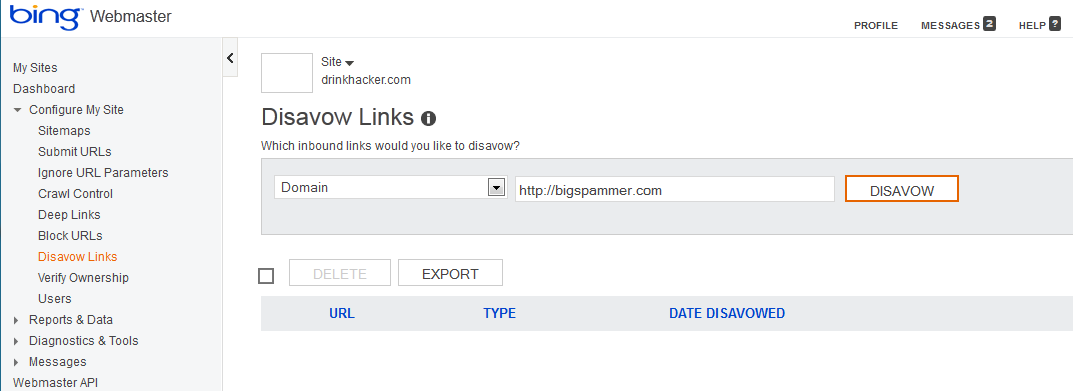
How to Improve Your Site's Search Ranking using SEOUse this tool to prevent Bing from penalizing your site if spammy sites link to it.
What happens if someone links to you from a spammy website? It makes you look bad; in fact, search engines can deem that your site is in fact a spam site as well. Your site is guilty by association, even if you have nothing to do with the linker.

Bing has rolled out a tool in its Webmaster Tools that let you “disavow” links from such places. It’s largely self-explanatory. Just add a page or domain to the tool and click the Disavow button to tell Bing you do not approve. This may improve your site's position in search results, but almost certainly it will help to rid the Web of some of its spam. Google’s “disavow” tool is expected in the coming months.
Carson Ward of Distilled.net (one of several online marketing agencies whose experts we interviewed) says these "disavow" tools will raise a lot of questions for search optimizers. “Will site owners be more likely to use tactics that search engines frown on if they can simply turn and tell search engines to discount the spam they have created? Will search engines trust site owners to crowdsource spam detection, and should they? Google's implementation of a disavow tool will largely determine the future of Web spam.”

It’s Not Where They Link, It’s How They Link

Ryan Draving, CEO of CompeteLeap, stresses that machine-generated writing and “spinning” (rewriting or slightly changing someone else’s content to look original) will become useless or even detrimental to your website, adding, “Search results will begin to shift more and more toward brands, and away from websites built purely for SEO. Brands typically invest in the kind of quality content that generates strong links from, and engagement with, bloggers, other websites, and users on social media networks.”
Those incoming links are still critical, but Draving notes that over-reliance on exact keyword phrases coming into your site (like “Chicago emergency plumber”) will penalize you. Says Draving, “Keep less than 11 percent of external links coming to your website via exact keyword phrases. Google expects to see either your URL or your company name as the link text for the majority of your inbound links. So instead of asking every website to link to you with your favorite keywords ('DIY Internet Marketing'), allow them to use the text they want.”

Don’t Discount Yahoo

It’s long been a habit for website operators to forget about Yahoo, even though Yahoo and Bing combined still have nearly a 30 percent market share. But what happens now in the Marissa Mayer era? Will Yahoo rise again as a search leader? Kaysha Kalkofen, co-founder of tSunela, says, “Keep an eye on Yahoo's relationship with Bing, especially in the paid search space. If that evolves, the paid search market will open up again.”

Take the Credit

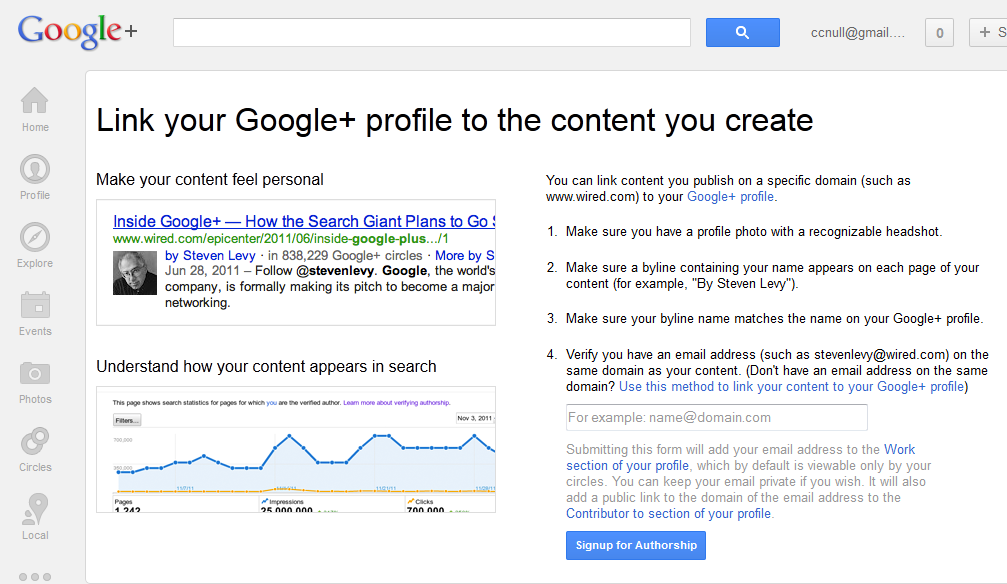
How to Improve Your Site's Search Ranking using SEOAuthor rankings could become more important than page rankings in the second half of 2013.
Have you ever done a Google search and noticed head shots next to a few of the posts at the top of the results? This is part of an experimental program within Google designed to link authors with published content, regardless of where that content lives.

Jon Payne, President and Founder of Ephricon Web Marketing, explains how “AuthorRank” works: “It’s generally the case that most significant websites have many different authors that contribute to their content. Google is looking at how to trust links from one author versus another, and weight them differently. We see AuthorRank replacing PageRank most likely in the latter half of 2013. Businesses must set up the ability to claim authorship of their content, but the process is pretty easy and (not surprisingly) is mostly handled within Google+.” To get started with the process, get your Google+ profile up to snuff (you must have a recognizable face-shot photo as your profile picture) and check out plus.google.com/authorship.

Social Networks Join in Olympic Games


As Olympic athletes take to a global stage in London this week, participants, coaches, and fans are expected to take to their favorite social networks in record numbers. Whenever something big happens -- tornadoes, political unrest, the World Cup -- people turn to sites like Facebook, Google+, and Twitter to voice protest, share their excitement and connect with their friends.
And with more people than ever using social networks, the 2012 London Olympics are expected to light up the major social networks over the next few weeks. (See also "10 Great Apps for the London 2012 Olympics: Bask in the Glory of Sport.")
The athletes and contests in these games are expected to be pinned, liked, tweeted, plussed and uploaded more than in any other Olympic Games. 
"If there's intrigue or when there are big moments, sure, you'll see some stupendous traffic," said Brad Shimmin, an analyst with CurrentAnalysis. "But I don't expect to see these sites explode under the weight of the traffic. They are very versed at scaling for extra load."
And that's the message coming from Google. A spokeswoman told Computerworld that Google was not concerned about the weight of the increased traffic caused by the Olympics overcoming either their search engine or their social network, Google+. Actually, increased traffic has already begun.
The Google+ page for NBC Olympics already is in more than 1.3 million circles, the Google spokeswoman noted. And searches for the word "Olympics" on Google are two and a half times greater leading into the Games than they were before the last Olympics.
"Google's data centers are designed to handle massive amounts of data every day, so we don't expect to see much of an impact due to increased traffic during the Olympics," the spokeswoman said.

Tweeting Up a Storm

At Twitter, which has seen some of its greatest traffic spikes connected to sporting events, the company is already seeing increased traffic related to the Olympic Games. A representative said Twitter was seeing 100 times more tweets about the Games than they did in the run-up to the 2008 Summer Games in Beijing.
Twitter is taking a more active role than usual with this year's Olympic Games.
The site has teamed up with NBC Olympics, which is an arm of the NBC Sports Group, to aggregate the best of all the tweets from Olympic athletes, coaches, family members, journalists and commentators on a dedicated Olympics page.
Twitter is trying to highlight the best of its Olympics-related content and help people tell great stories about their experiences, the representative said.
CurrentAnalysis' Shimmin said it's smart for NBC, which is airing the Olympic games this summer, to reach out to social networks, like Twitter and Google+.
"People aren't just sitting in front of their televisions," Shimmin added. "Why not reach them when they're waiting for a bus or waiting for dinner? The information needs to be packaged so it's digestible in a more sporadic way. People want to get their information and cheer for their favorites throughout the day, not just in the evening when they're in front of the TV."
By using Facebook to give people updates on specific sporting events, videos of the competition and clips of athlete interviews, social networks allow fans to create moments of spontaneous camaraderie, he gave as an example.
"It might be akin to what you'd experience if you were sitting in a bar with people are watching a sport," Shimmin said. "Someone stands up and cheers and you feel that. With social networks, it's the same, only virtually. It's that sense of belonging."

Athletes Take to Twitter

However, for the athletes who are tweeting and posting updates to their social pages during the games, there are some big risks involved.
Just ask Paraskevi Papahristou, a 23-year-old triple-jump athlete from Greece. After making what was considered a racist tweet, she was kicked off her Olympic team on Wednesday.
So far, though, most athletes are having better luck with their social networking.
U.S. hurdler Lolo Jones has more than 172,000 followers on Twitter. And she's keeping them entertained with tweets like this, "Notify Olympics: I can't run. Injury:BroKeN heart RT @LonaPete RT @eonline Prince Harry is off the market! Sorry,ladies".
U.S. swimmer Michael Phelps, who won 16 Olympic medals in previous Games, has his own Facebook page with nearly 5.5 million "likes," as well as 277,000 followers on Twitter.
The International Olympic Committee realizes how important social networking is this year so itcreated a social media hub to help fans keep track of their favorite athletes and events.
"We're in uncharted territory to some extent," said Dan Olds, an analyst with The Gabriel Consulting Group. "The last Summer Olympics was four years ago -- before the massive global surge in social networking. It'll be interesting to see if the Olympics spurs significantly more interactions or if it's on par with what we'd see with other major sporting events."

Google+ Use Has Skyrocketed


Report: Google+ Use Has Skyrocketed

Social network Google+, which turned a year old at the end of June, has seen its user base take a dramatic jump in the past six to seven months, according to comScore, an Internet traffic monitor.
According to comScore, total unique visitors to Google+ in the U.S. went from 15.2 million in November 2011 to 27.7 million in June of this year. That's a jump of 82%.
Worldwide, Google+ visitors jumped from 66.7 million to 110.7 million in the same time period, marking a 66% increase, comScore reported.
"That's impressive," said Zeus Kerravala, an analyst with ZK Research. "I guess there is room for an alternative social networking vendor."
Google's social network had more good news earlier this month. The American Customer Satisfaction Index released a survey showing that while Facebook's user satisfaction rating dropped 8% over the last year, to 61 on a 100-point scale, Google+, making its first appearance in the survey, scored 78.
Kerravala noted that Facebook may be the world's largest social network with more than 900 million global users, but the site has taken some major hits lately.
First, Facebook's IPO failed to take off as industry and financial analysts had expected. While the company's stock opened at $38 a share, it was expected to soar to $50, $60 or even $90 a share. That did not happen. As of 2:30 ET on Monday, Facebook's stock was trading at $23.30.
Late last week, during Facebook's first quarterly earnings call , the company reported a loss of $157 million for the quarter ended June 30. However, Facebook also boosted revenue by 32% in its first earnings report, bringing in $1.18 billion and just topping analysts' expectations.
With mixed financial results and a lower-than-expected IPO, Facebook has lost some its luster, opening the door to competitors, Kerravala said.
"People trying out Google+ certainly create a threat to Facebook," he added. "There might be a bit of the alternate coolness factor here, too. Where the masses use Facebook, some people wanting anedgy alternate turn to Google+. Who wants to be on a social networking site with your parents and little siblings?"

Google+ Hangouts Host Olympic Athletes


Google+ Hangouts Host Olympic Athletes

Google’s Hangout feature is once again giving Google+ users a chance to get closer to the stars, this time with a Olympic twist.
The New York Times-sponsored series started on Wednesday with basketball stars Carmelo Anthony of the New York Knicks, and Chris Paul of the Los Angeles Clippers. Both are members of the 2012 USA Basketball team. The hangouts will run through next Tuesday.
Google Hangouts have been a favorite stop of politicians, celebrities, and friends.President Obama used the feature to connect with voters back in January, and musical artists the Black Eyed Peas participated in a hangout last October to chat with fans shortly before they took the stage at a concert in New York City.
But with the Olympics coming up in short order, it makes sense for these hangouts to feature some of America’s top athletes, doesn’t it?
That said, the list of athletes participating is heavy in the marathoner department, with three runners. Friday’s chat featured Shalane Flanagan, a long distance runner planning to participate in the Olympic Marathon.
Monday's Olympic Games Hangout will also feature another runner, male marathoner Ryan Hall, who is expected to contend for a medal in London. His Google Plus hangout begins at 2 p.m. ET. Hall will be followed by brothers Bob Bryan and Mike Bryan, the second ranked men’s doubles team in the world and widely expected to earn a medal in the Olympic tennis tournament. Their chat occurs at 5 p.m. ET Monday.
The Hangout series ends on Tuesday at 6 p.m. ET, with yet another marathoner, Kara Goucher. All chats occur from The New York Times’Google+ page. If you would like to ask a question, either comment on the post announcing the Hangout or post the question to your own Google+ wall with the hashtag #London2012Hangout.

Saturday, September 1, 2012

Xperia X10

Xperia X10, coming a fix for the battery
They seem to get good news for owners of the Sony Ericsson Xperia X10 . The house seems closer to the release of a fix to optimize battery consumption. Currently there is no official confirmation but it seems that this update will arrive during the month of May and is aimed at solving the problem of excessive consumption during the stand-by the phone. We do not know if there are other fixes with this or other updates.
 
Blogger Templates